MeinBau teamed up with Uplab to build a budget planner
for construction projectsand scale it into a white-label
web solution for banks
Domain:
Finance
Country:
Austria
Team size:
3
Collaboration:
2017-now
challenge:
Bureaucratic snags can be a significant challenge when building a private house in Austria. Because of the strict building standards and regulations, like those related to energy efficiency or insulation, the construction process may turn into a nightmare adding significant cost and time. Add to it endless bank visits in search of construction loans, and you might give up the idea of building a house. Our client, MeinBau, found themselves in exactly this situation, but they didn’t give up.
MeinBau is a startup from Austria founded by two partners. When one of the co-founders started building a house, it appeared not as easy as it seemed. Inaccurate estimates, unexpected costs, dozens of subcontractors ‒ all this made the process expensive, time-consuming, and stressful.
Having had a negative personal experience, our client decided to create a simple construction cost calculator that would help people get loan offers from banks to finance their construction or renovation projects. To implement this idea, MeinBau turned to Uplab.
project evolution:
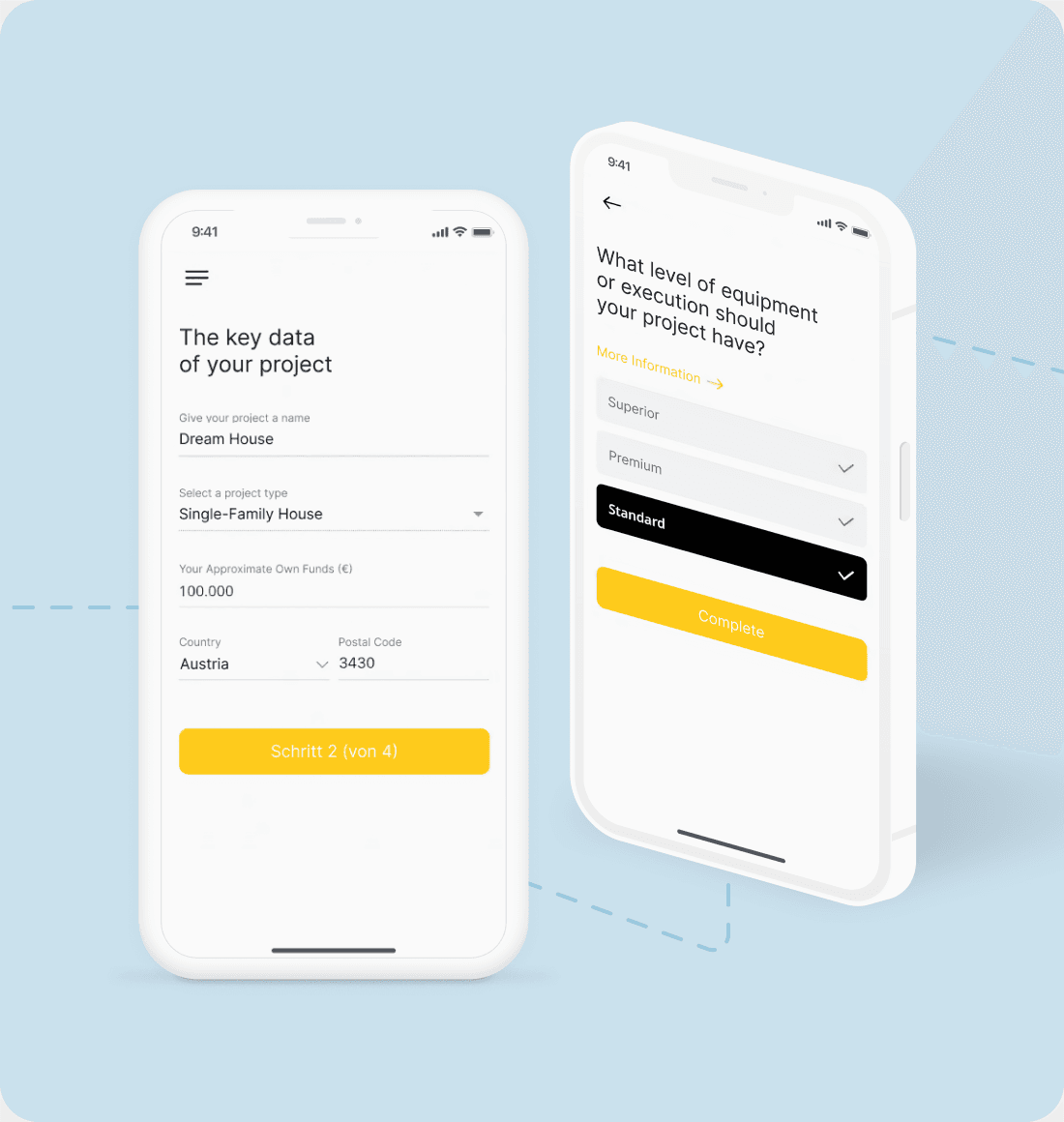
Because of budget constraints, we decided to build a minimum viable product (MVP) that enabled us to reduce costs and accelerate the development process. We launched a cross-platform mobile app where users could generate a comprehensive construction project budget, track expenses, and receive personalized financing proposals from banks.
Once the software was launched, it received a lot of positive feedback from users. This encouraged MeinBau to plan for further growth. They contacted multiple banks to promote the app and got an attractive offer from a major bank in Austria to create a white-label web application based on MeinBau's functionality.
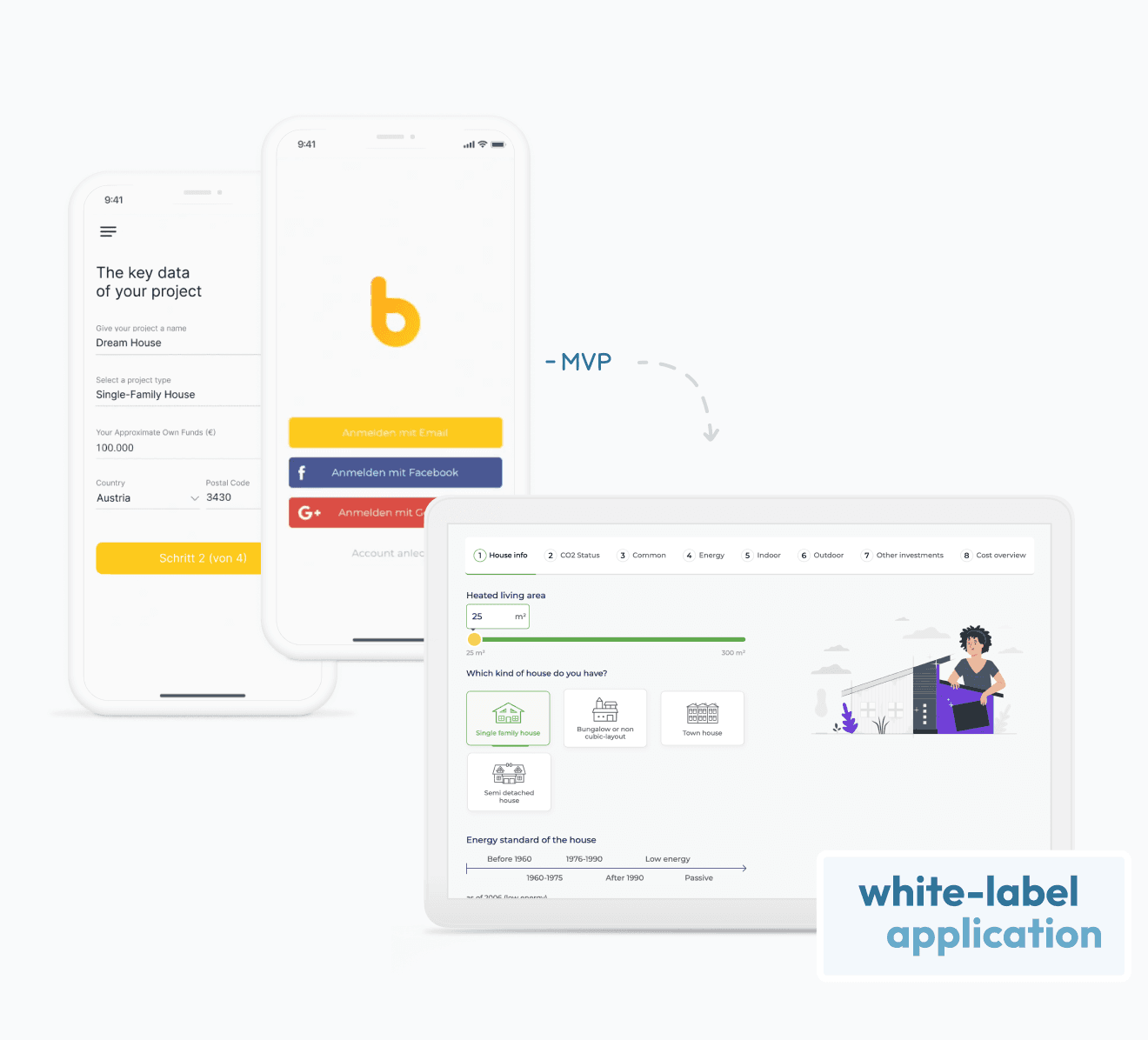
Uplab's team got to work right away, upgrading the mobile app to seamlessly run on web platforms and handle the increased traffic while maintaining high security and performance standards.
Following a successful collaboration with an Austrian bank, our client expanded the startup.
Read on to discover the details
Project highlights

Built an MVP of a cross-platform mobile app using Meteor

Upgraded the technology stack to develop a white-label web application for a bank

Switched from Heroku to AWS to easily scale the web app

Turned the cross-platform mobile app into a high-performing web solution
Testing the market demand with an MVP

Choosing Meteor for fast product development
At that time, Meteor was gaining popularity as a full-stack tool that allows developers to create a high-performing product fast, so we chose it as a core technology for the MVP.
Using Meteor, we could focus on feature development instead of spending time setting up different tools and integrating third-party libraries. This helped us fit the budget while delivering a robust software solution.
Cutting down the hosting costs with the Heroku cloud platform
We opted for Heroku for several reasons. Firstly, it offers a wide ecosystem of add-ons and plugins allowing developers to deploy and scale apps fast. Secondly, using Heroku we could deploy software while avoiding expenses for server management. Overall, it was a scalable, secure, and cost-effective cloud platform that perfectly fitted our requirements at that moment.
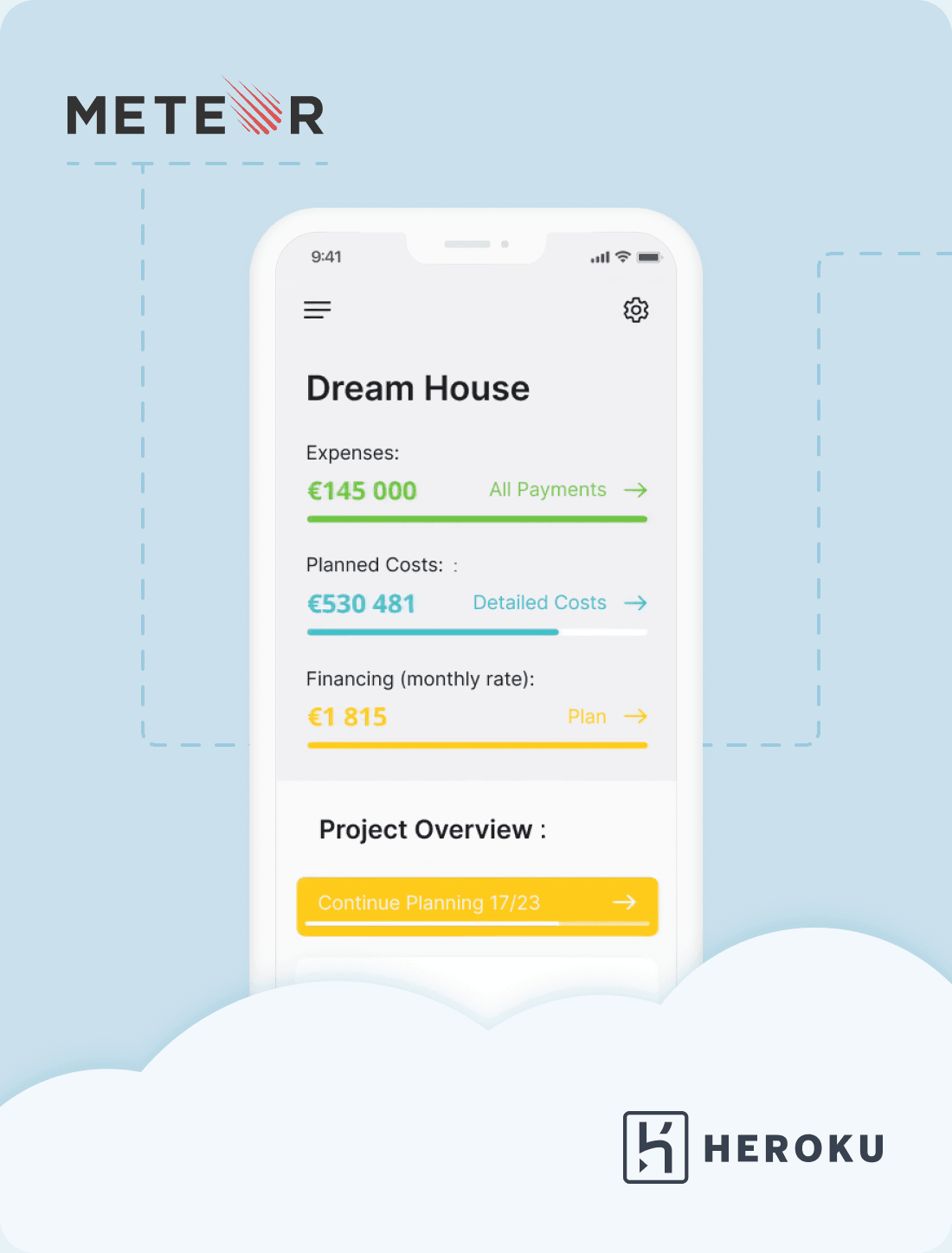
Launching a cross-platform mobile application
With the help of Uplab, our client created a user-friendly budget planner that we managed to complete within the allocated budget and timeline. Once launched, the app garnered significant user interest and positive feedback, serving as a demonstration to secure financing for further product development.
Creating a white-label web solution for a bank
After the release, one Austrian bank showed interest in the MeinBau app. However, they were more inclined to develop a custom web application similar to our client's solution.
Our team altered the tech stack to better suit the MeinBau partner's requirements. We reworked the code to ensure web platform compatibility while also enhancing scalability and stability.
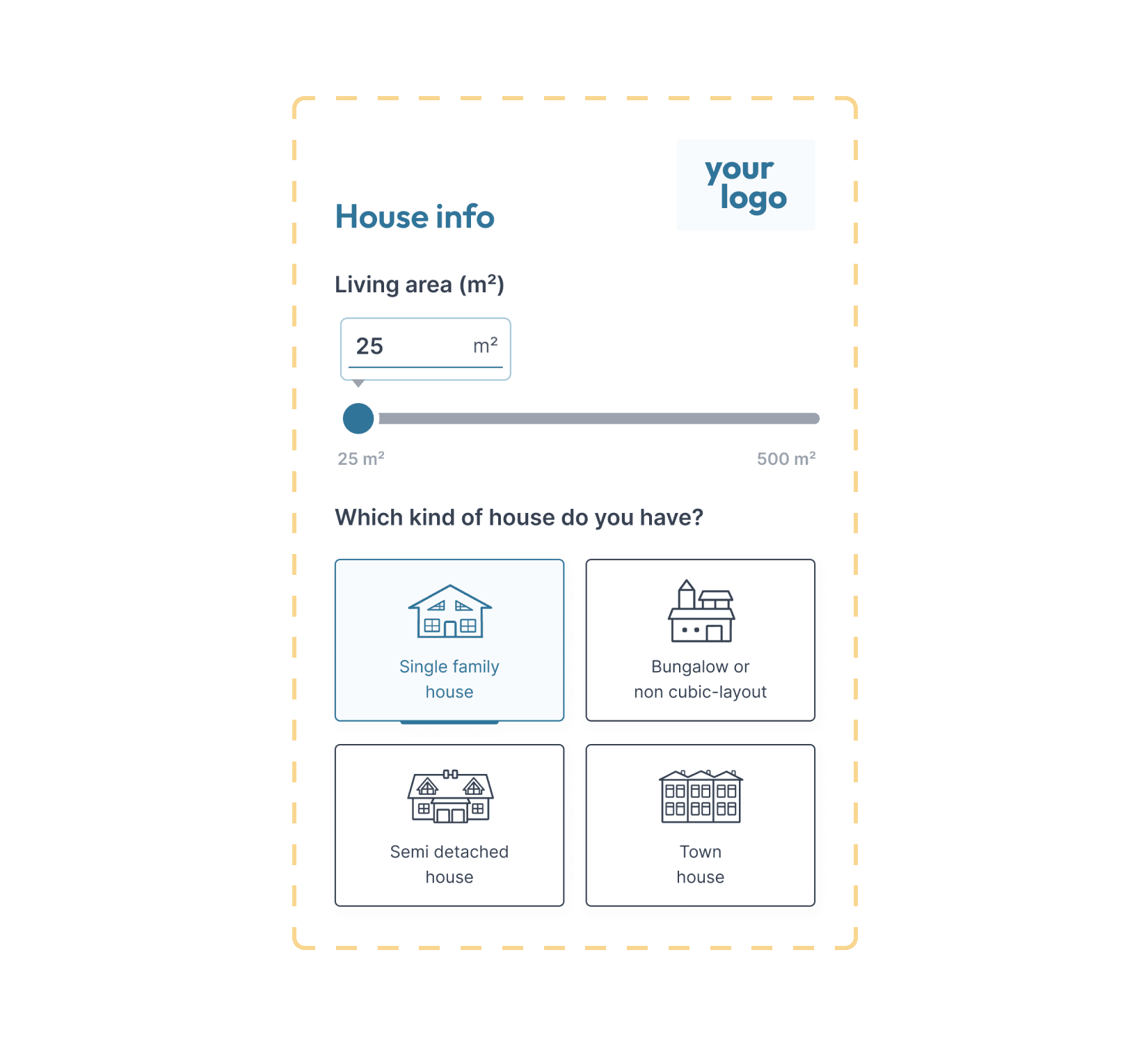
Here’s a breakdown of our approach:
Replacing Meteor with Node.js and React

While Meteor.js may be an excellent choice for building MVPs, it may not be the most suitable option for more intricate and scalable applications – such as the one we were developing. That’s why we replaced Meteor with a Node.js backend and React frontend, which allowed us to have better control over the app's architecture and tailor it to meet the project's specific requirements.
Integrating TypeScript to improve code maintenance

To improve code quality and reduce the risk of regression, we introduced TypeScript into our technology stack. It helped us identify errors and bugs earlier in the development cycle while ensuring better consistency and maintainability of the codebase.
Moving from Heroku to AWS to improve scalability
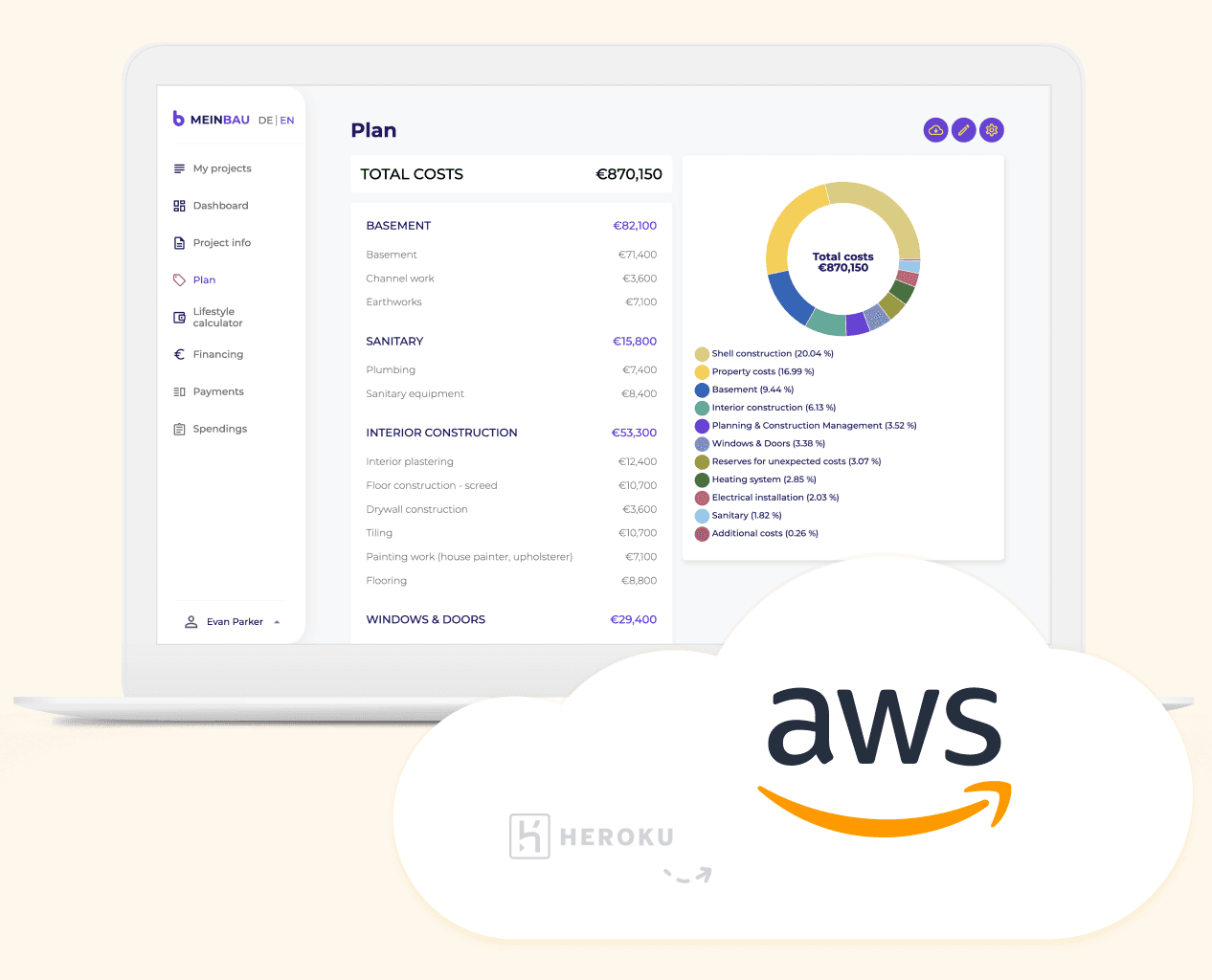
Heroku is an excellent platform for rapid development and deployment, particularly for building MVPs that require fast launch times. However, as our application and needs expanded, we transitioned to AWS – a solution that provides more scalability and flexibility options. This shift enabled us to build a scalable and manageable infrastructure to handle increased traffic and user demand.
results:
- Intuitive budget planner for estimating construction projects is ready for expansion
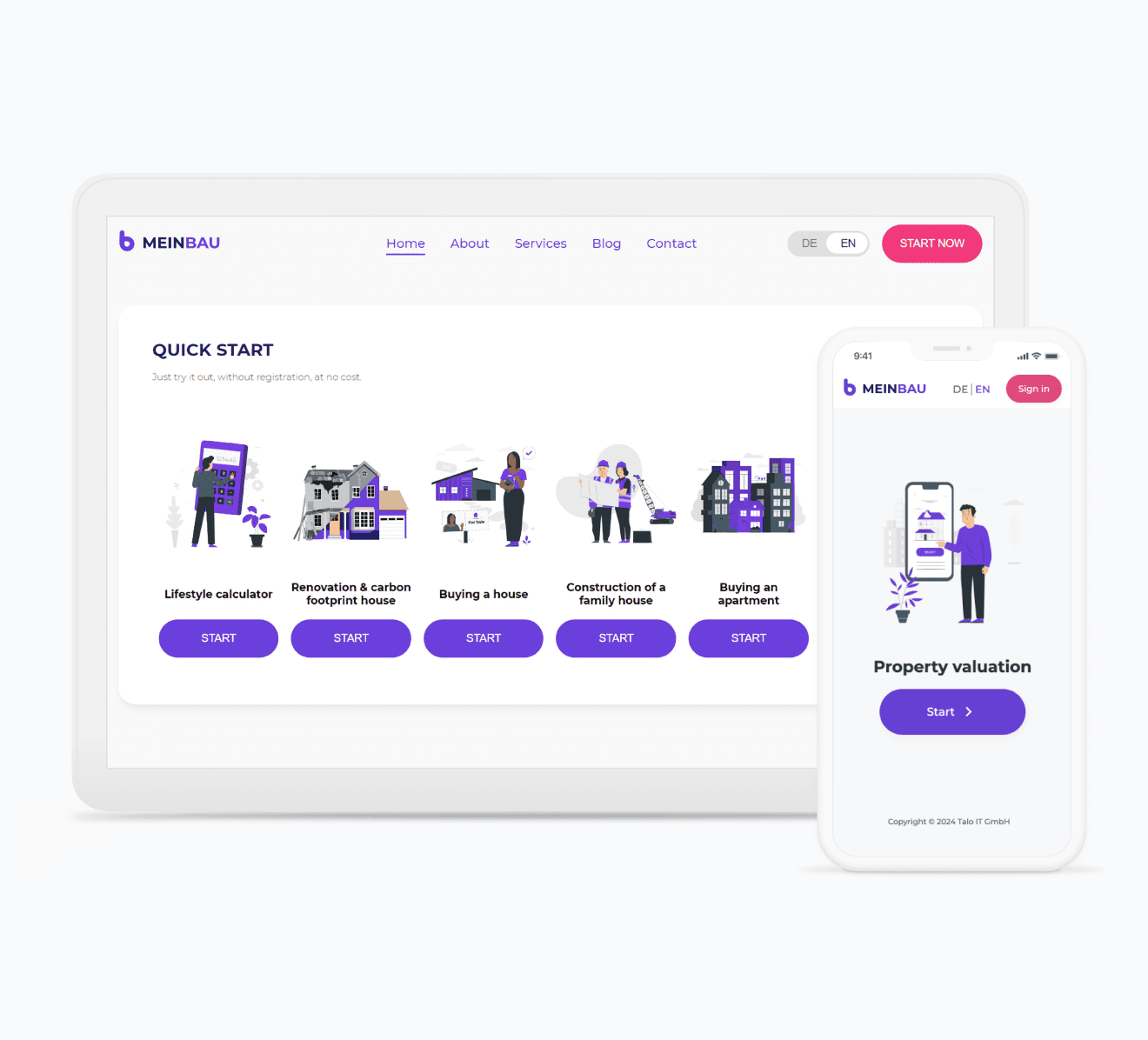
After the fruitful partnership with the Austrian bank, MeinBau decided to work further on improving their solution. Drawing from our previous experience building a white-label application, we developed a user-friendly web platform designed to assist users in accurately estimating project costs and streamlining the process of acquiring financial offers from banks.
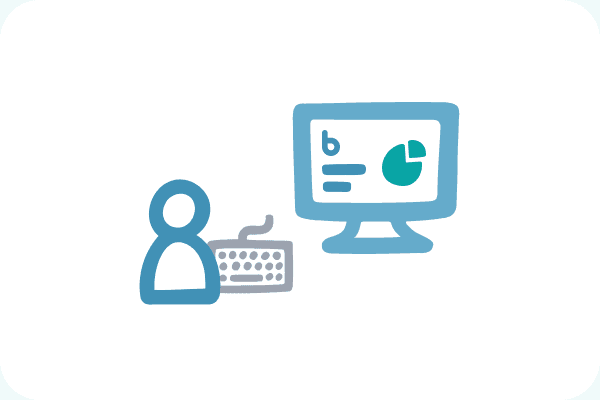
Here is how it works:
Once the user enters the necessary data, the software generates a budget report that is sent to the bank only with the user's approval.

The bank then reviews all received reports and selects the most suitable one.

As well as that, bank pays a fee to obtain the user's contact details.

Afterward, they send an offer via email.
With a budget report in hand, the bank can provide loan offers while avoiding the task of assessing the creditworthiness of each client.

The client, on the other hand, can choose an offer that best matches their construction requirements and budget.
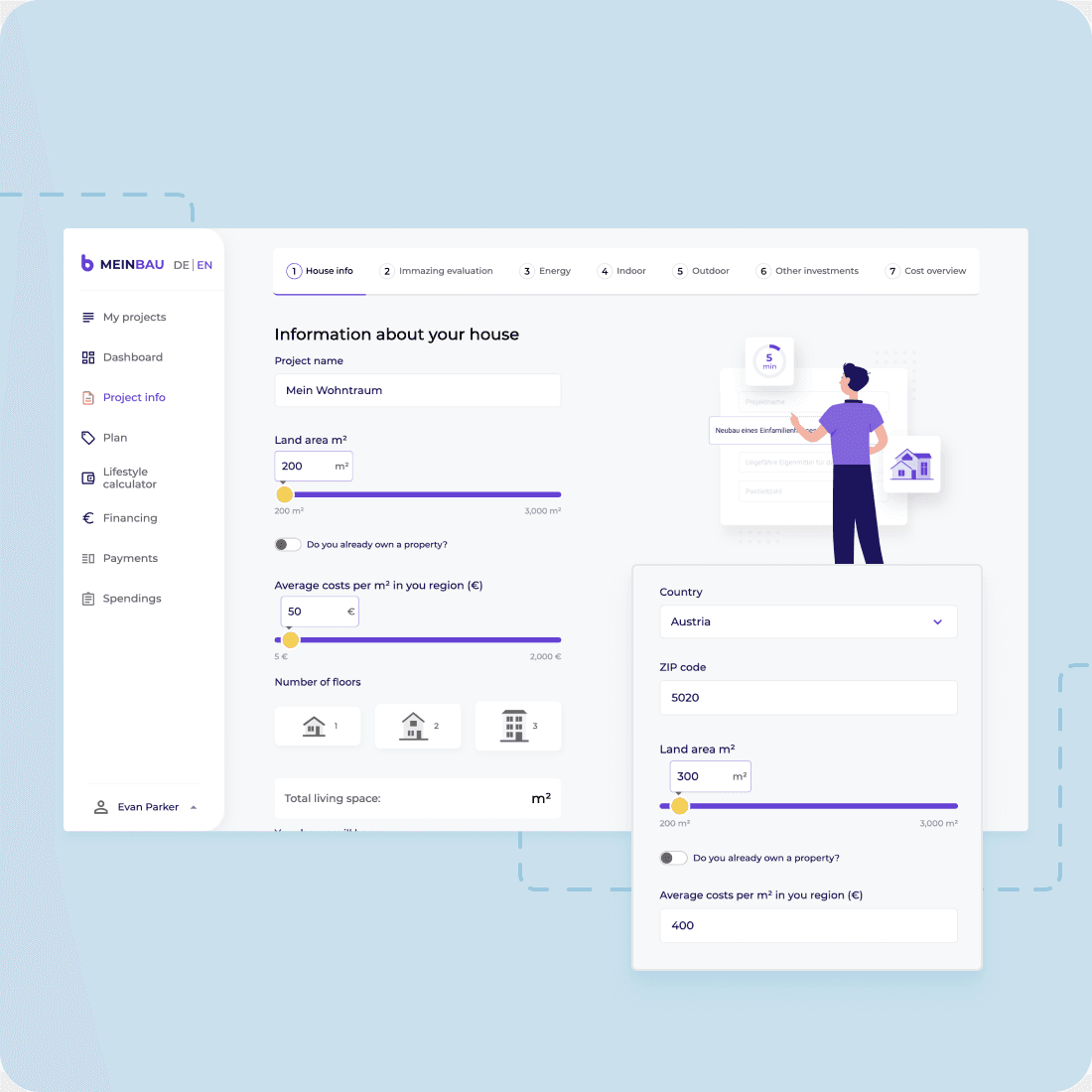
Construction cost calculator
The platform features a built-in cost calculator that enables users to estimate the expenses associated with their construction or renovation project, and plan their future financing accordingly.
By entering relevant data such as:
- approximate available funds
- area in square meters
- cost per square meter in their region
- number of floors
- other details
Users can plan their building project more efficiently and generate a comprehensive budget report that can be submitted to a bank for consideration.
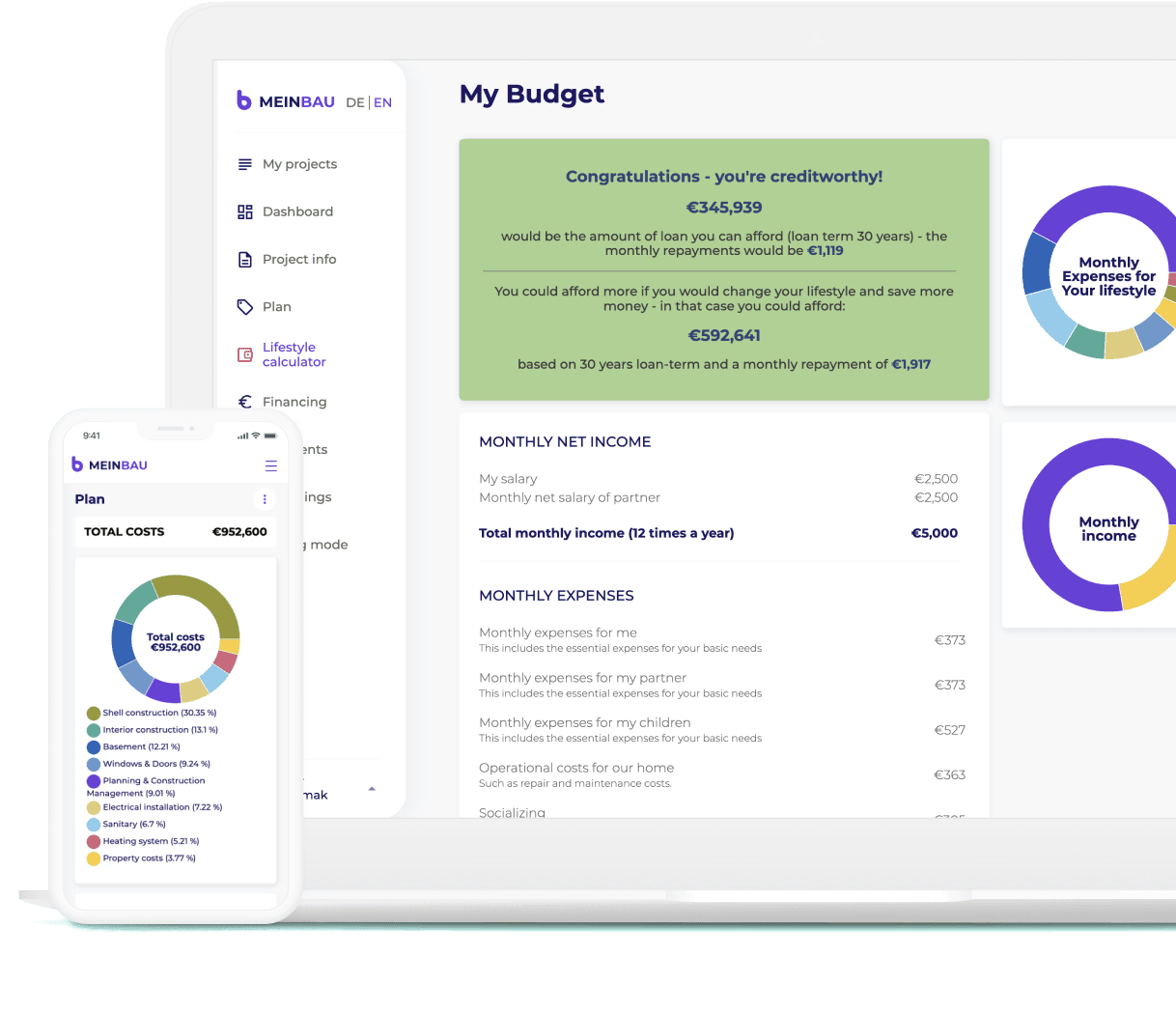
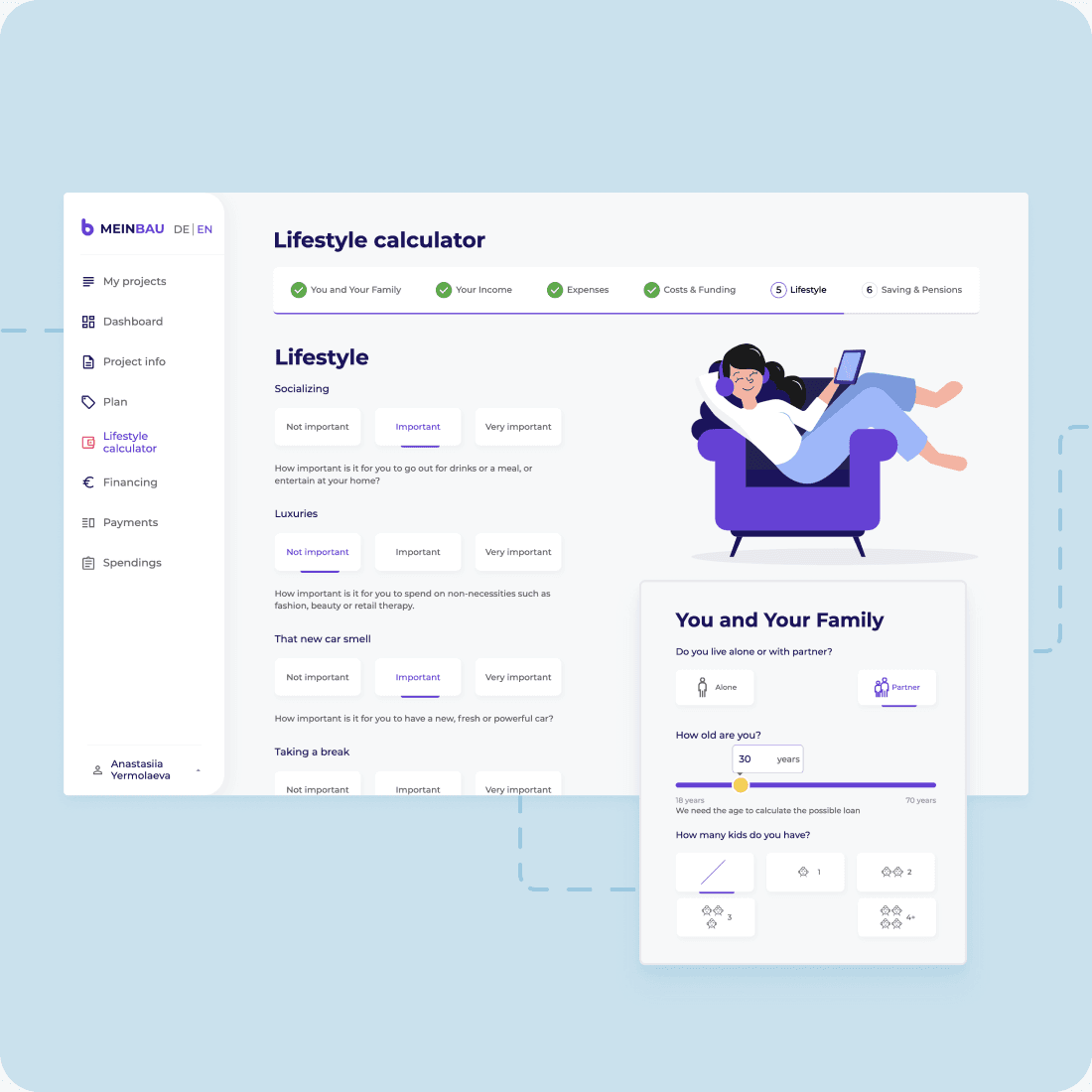
Lifestyle calculator
To optimize the process of getting loans from the bank, the MeinBau app also includes a lifestyle calculator with an overview of user income and spending.
Here, users can enter data about:
- family members
- number of cars
- hobbies
- social life
- expenses
- and more
to estimate whether they can afford to pay a loan back.
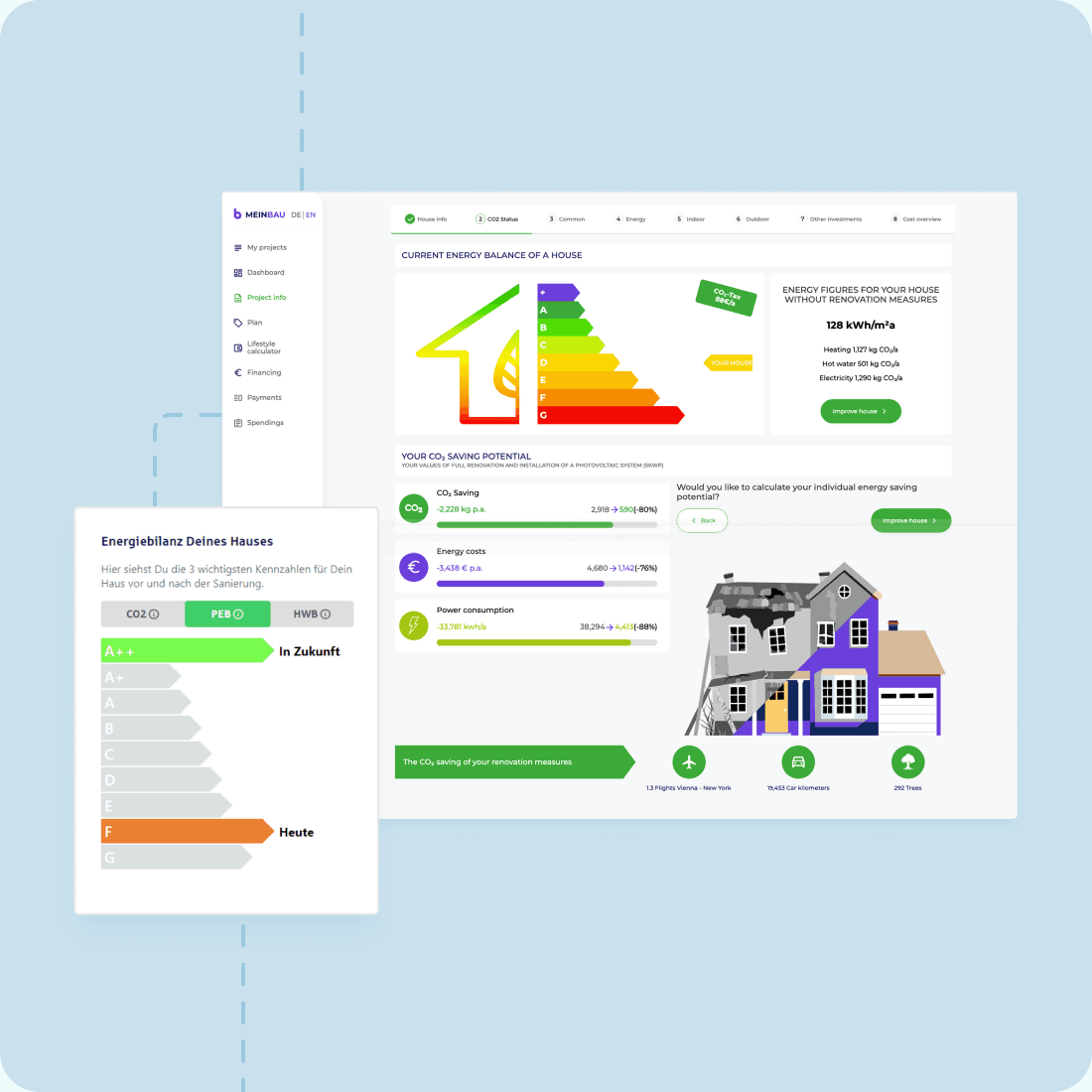
Energy and CO₂ balance calculator
With the goal to reduce carbon emissions, many European countries adopted a carbon tax, and Austria is not an exception. MeinBau helps users calculate their home's energy and CO₂ balance before and after renovations while showing the amount of money they can potentially save in the future.
It works like this: users enter data, such as:
- heating area
- heating system type
- building type
- and more
The software analyzes it to determine if renovations can reduce carbon emissions and save money.
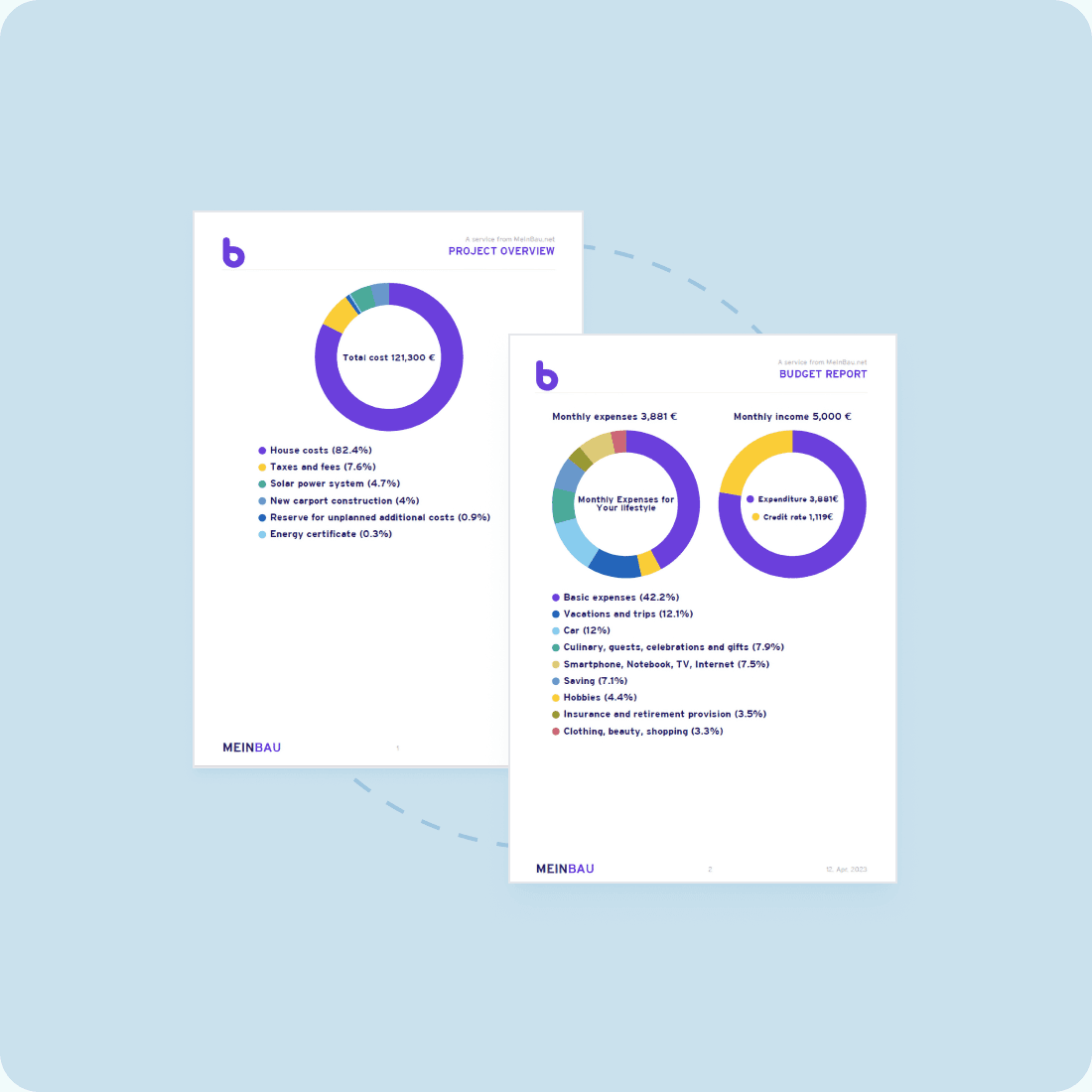
Detailed budget report
Once the user enters all the necessary information, the platform generates a precise budget report that includes:
- house costs
- taxes
- fees
- reserves for unplanned expenses
- affordable credit rates
- monthly repayment rates
- and more
The user can then submit the report to the bank, which will subsequently send loan offers to the client, enabling them to choose the most suitable one.

What’s next?
We continue our collaboration with MeinBau and don’t stop at the results achieved. Together with our client, we plan to turn the MeinBau platform into a marketplace for construction companies, where users can receive offers not only from banks but also from organizations providing construction-related services.
They really dive deep…
We were looking for a software company which knows how to bring the 'think big start small' principle on the ground. The Uplab team are in this field really great, they are great in requirements-engineering, setting up a scalable architecture and iterative development.

Werner S.
Co-founder, MeinBau
Read more stories